
Several years ago, I was walking out of Tescos (or Crazy Prices as it might have been then) on the Lisburn Road, when a man politely stepped back to let me pass. He had a slightly bowed head, an almost apologetic look…possibly because he was used to being recognised. In fact it was several seconds before it dawned on me “that was Alex Higgins”….the snooker legend.
Indeed, for maybe a decade up to his death in the summer of 2010, Alex Higgins was a familiar figure in and around Shaftsbury Square. We often used the same bookies and he was an unlikely figure in his trademark dark overcoat, fedora hat and spectacles perched uneasily on his nose…rather like a man who was used to reading horse racing pages and glancing up at the bookies “boards” and TV screens. I often saw him make the familiar gambler-alcoholics walk from bookies to pub and vice versa.
Higgins was born in the Donegall Road area and there are several reminders of him in the area. 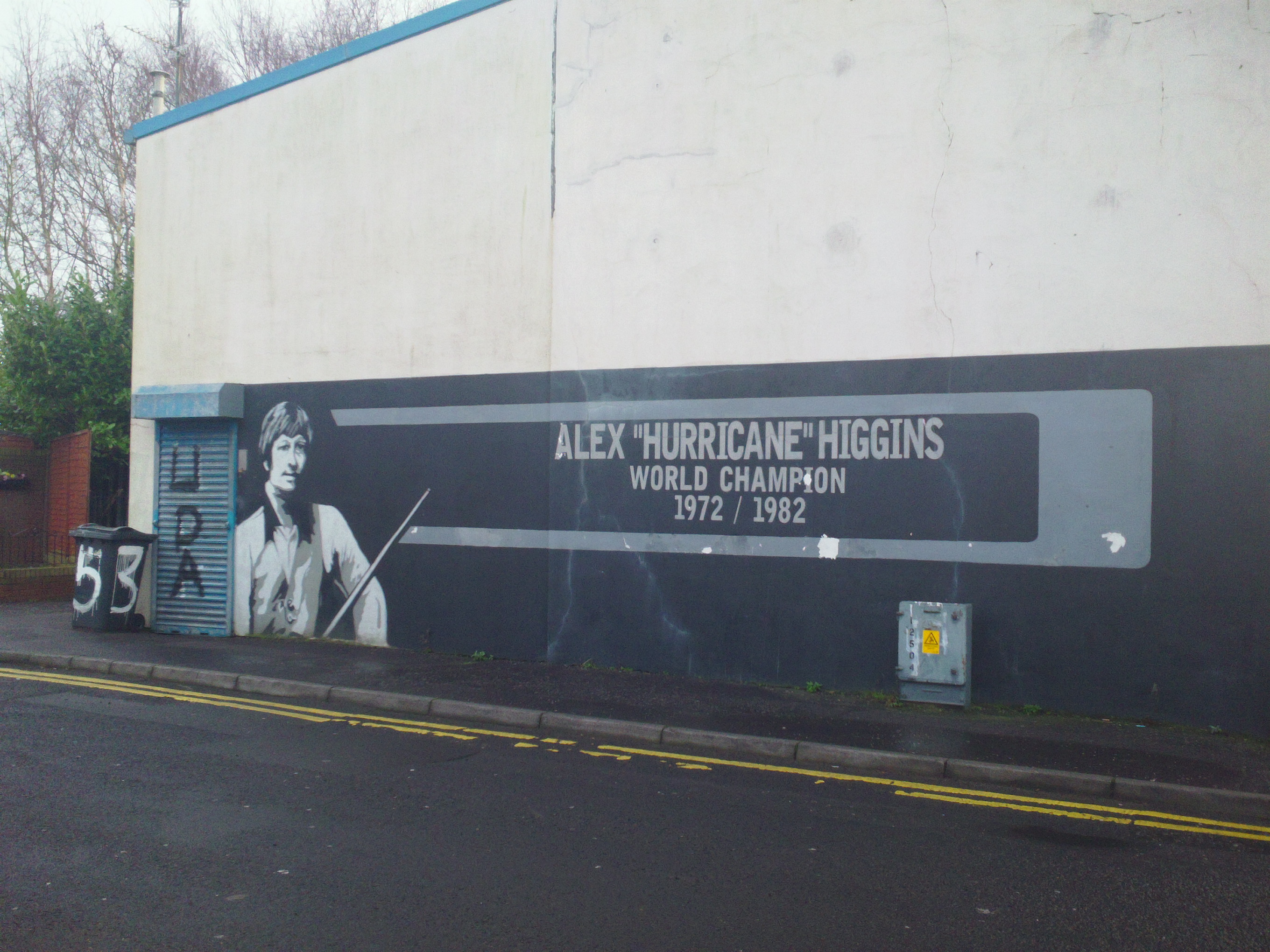
Born in 1949, Alex Higgins was three years older than me and learned snooker even before he left Belfast at age of 15 with the intention of being a professional jockey in England. It is of course an old cliché that “proficiency at snooker is the sign of a mis-spent youth” and the life of a snooker hustler was already familiar to Higgns before he left Belfast.
Too weighty to be a jockey, Higgins became a snooker professional. Thanks to colour television and a well loved BBC2 programme “Pot Black”, which showcased snooker as the ideal sport for showcasing colour television, snooker established itself as an obsession in the British Isles in the 1970s and 1980s. It was also of course extremely cheap to cover. All the action takes place on a single table….tournaments lasting two weeks like the World Championships had saturation coverage…..and heavily subsidised by tobacco companies. Helped by the fact that while waiting their turn on the table, most snooker players were “smokers”. Alex Higgins was a “sixty a day” man.
Of course the early TV snooker players were middle aged men who had a lifetime of snooker hustling behind them but the snooker authorities were anxious to distance itself from the seedy image. But Higgins bucked the trend. He secured a doctors certificate which exempted him from wearing a bow tie. It gave him a rash, apparently.
Against the middle aged men, Higgins was a “Hurricane”. His style of play… fast and unothodox led to him attempting “impossible” shots which sometimes worked. He was however inconsistent and impatient. And a disciplinary nightmare for Snooker itself. He won the World Championship in 1972, at the age of just 22, just as the sport was taking off. He won the title again in 1982, styling himself “The Peoples Champion” a tacit rebuke to the men in blazers who ran the game.
Higgins was probably already past his best in 1982. Arguably Snooker peaked in 1985, when Dennis Taylor beat Steve Davis at 1am in the World Championships. I recall watching that match in my sisters house in London. My wife was watching it at home. So were my parents in their house. My parents-in-law. My uncles and aunts. Thats how it was ……snooker was a game watched by all. With a tornament every month it was the ideal sport for middle aged husband and wife to watch….or granny and grandad to watch…. or teenage kids to watch. Or so it seemed. 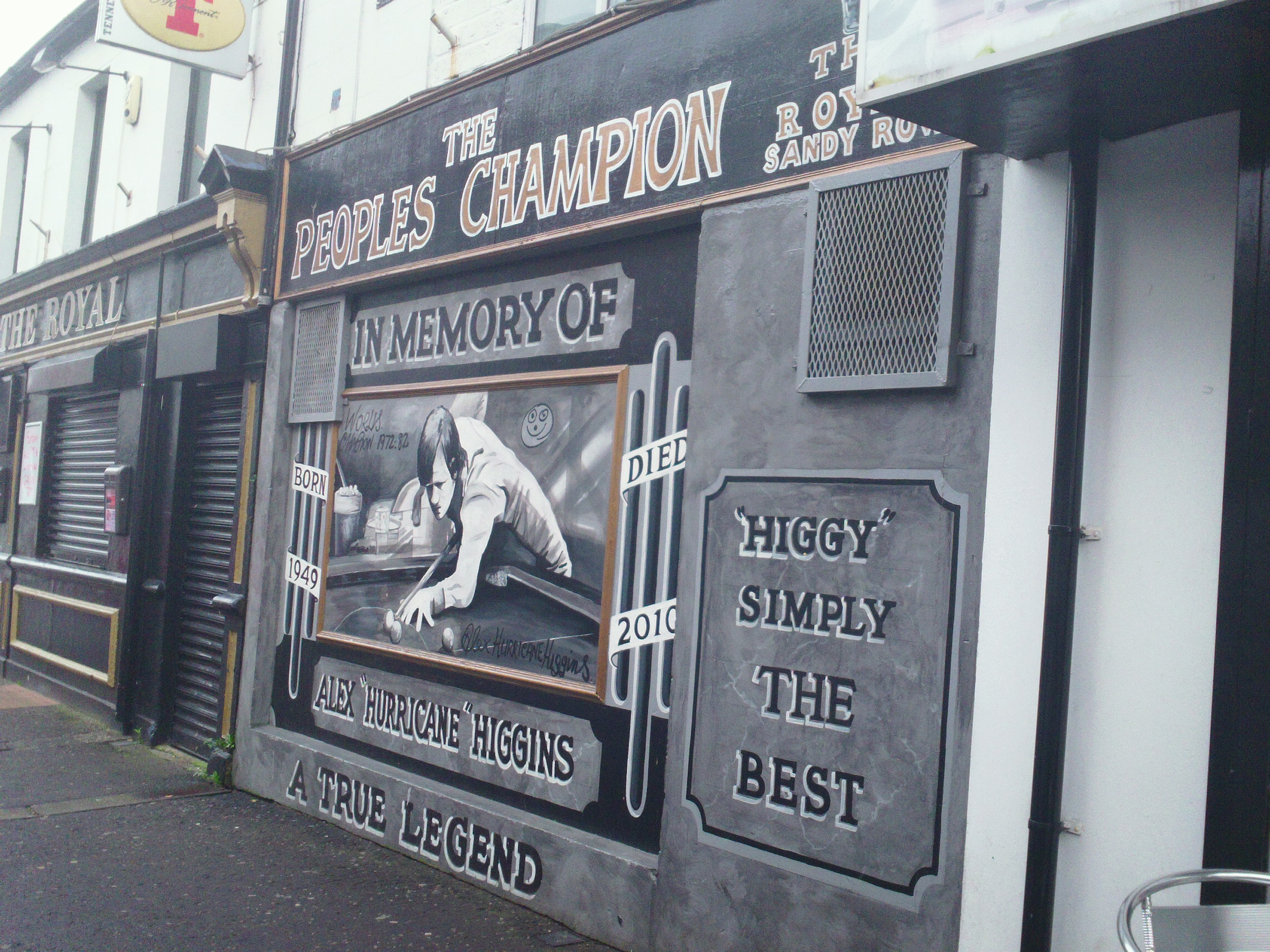
Alcohol, Gambling, Cigarettes, Cocaine and Women……as well as inconsistent playing, a bad temperament, depression and disciplinary record all ended Higgins career. He retired and although he attempted comebacks he was a frail figure hovering around 100 pounds or less. He came back to Belfast…..and hustling. The image of “flawed Belfast genius” (much like George Best, the footballer) overshadows the fact that he was often violent …….with spouses and other women.
I suppose that Higgins was there at the start of the “snooker years” and retired at the time when it lost a lot of appeal. The biggest reason is that tobacco companies were getting free advertising (tobacco advertising is banned in Britain and Ireland) thru sponsorship and that loophole has now been closed to them. For example, the “Embassy” World Championship lasted fifteen nights and was shown for several hours a day……all with the “Embassy” cigarette logo. And possibly the middle aged audiences of the 1970s and 1980s just died. And maybe too many charges of fixed matches and betting scams suggested that the game would never really shake off its reputation as a game for hustlers and gamblers.
However it has to be said that his final years in Belfast…in the area around the Lower Donegall Road/Sandy Row ……were relatively quiet. He was back with his own people who had a curiously protective attitude to him. But possibly not protective enough. He had throat cancer and alcoholism. Effectively a “down and out” …albeit a rather dapper one.
And a man living alone who just did not look after himself. He developed pneumonia and one of the causes of his death was……malnutrition. He died in his home, an appartment block in Sandy Row across the road from the Royal Bar, where he is depicted on the painting shown above. A faded wreath in the shape of a snooker table is on the appartment block.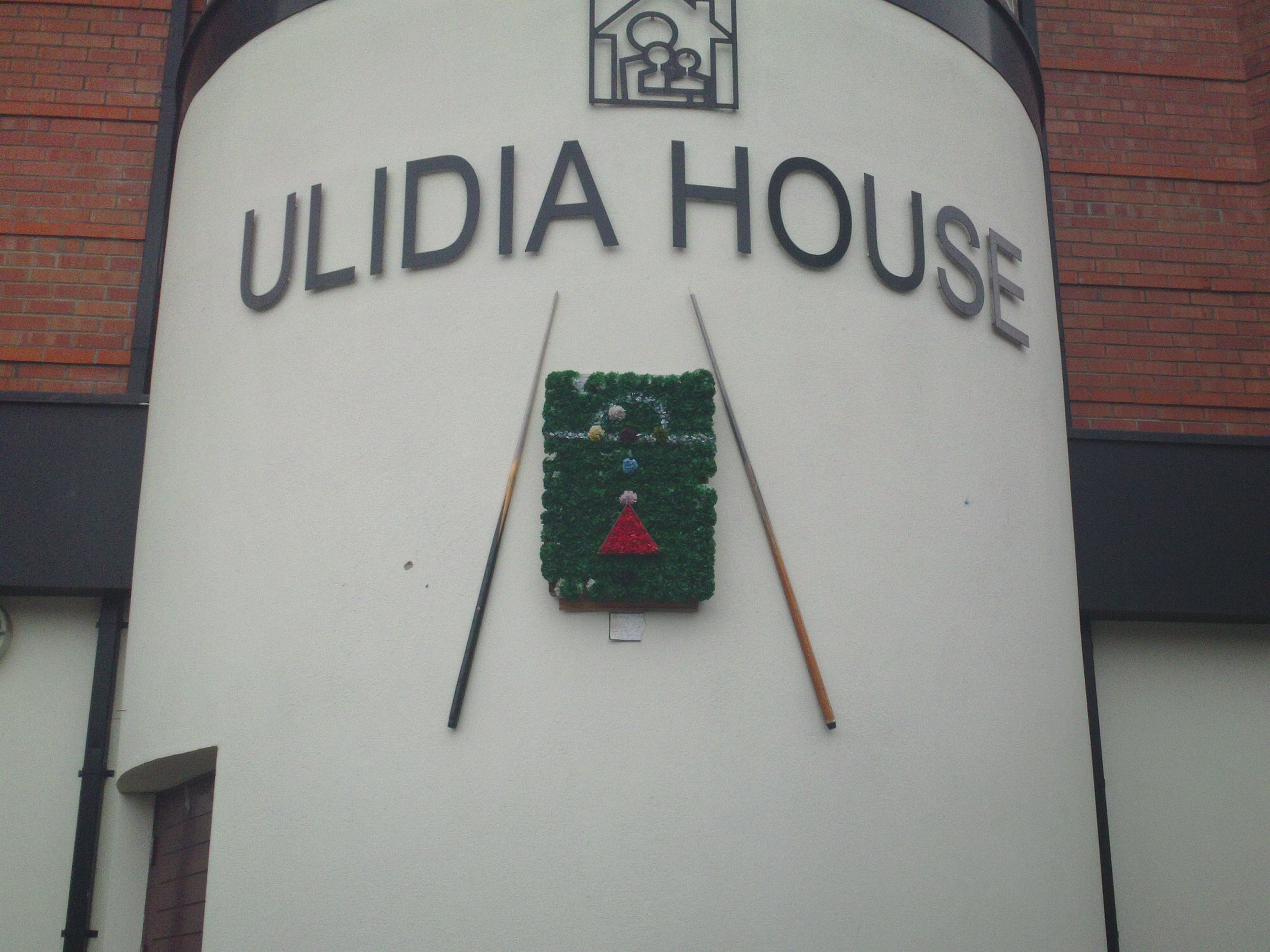
As always, it is difficult to evaluate his legacy. He made and lost about £5 million. And for the most part, people accept his life and career as a cautionary tale of unhappiness. He has been embraced by a very localised community…….a loyalist community around Sandy Row who feels itself wary, defensive, marginalised and misunderstood. Ironicaly the “Simply the Best” slogan on the mural is the unofficial slogan of the Ulster Defence Association, a terrorist group which dominated the area.
For me…….the enduring image is NOT the snooker player. It is the man at Tescos.
 Keeping An Eye On the Czar of Russia
I really enjoy reading your reflections!
Thank you. Later on today, I hope to post some reflections on the town of Bangor, about 12 miles from Belfast. Later this year I will turn 60 and will be entitled to free public transport on bus and train. I think ths is a great incentive to get out and see things.